Text & Regex
Find, match, transform — strings made simple
Regex tester with live capture groups, text case converter, slugify, diff checker. Click-to-explain the regex so you understand what you wrote, not just that it ran.
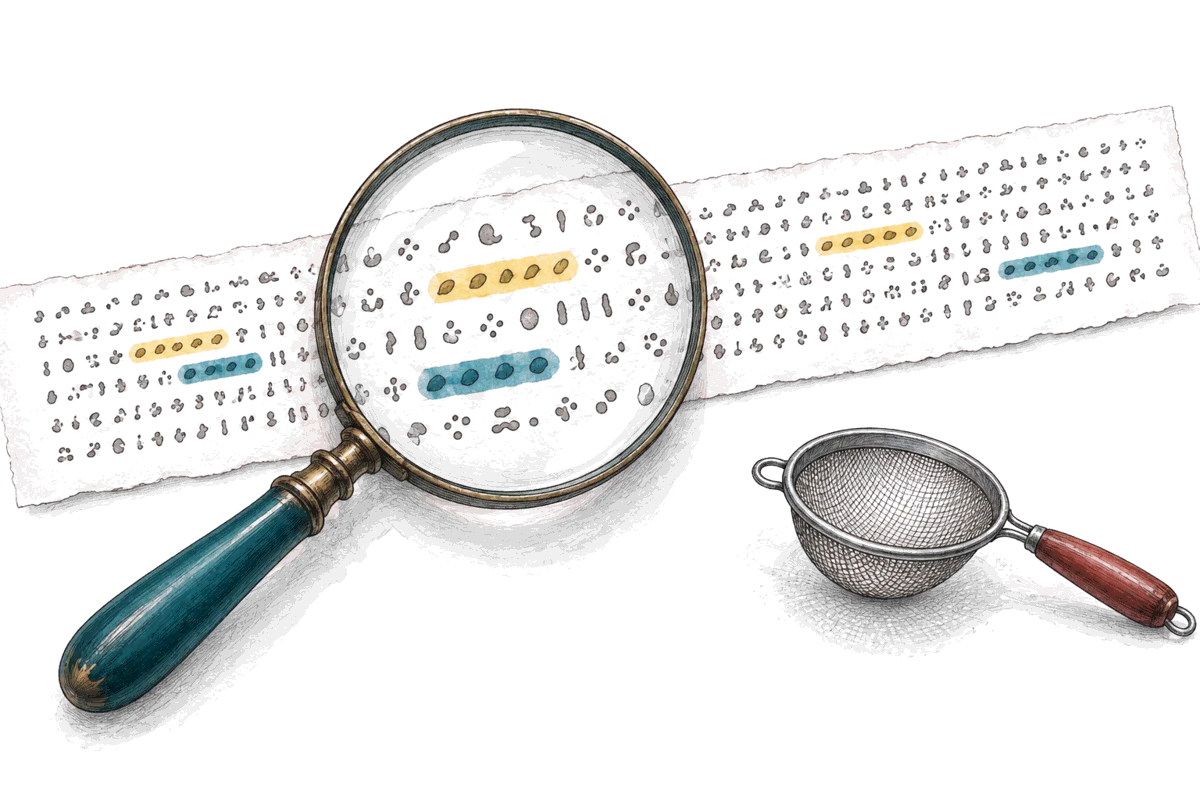
8 tools
- URL ParserBreak a URL into protocol, host, port, path segments and query parameters. Repeated query keys are kept, not collapsed.
- User Agent ParserRead a User-Agent string into browser, engine, OS and device. Handles the fact that Edge claims to be Chrome and Chrome claims to be Safari.
- Regex TesterTest JavaScript regex patterns against any text. Capture groups, named groups, flags, replace mode. Browser-only.
- Text Case ConverterConvert text between camelCase, snake_case, kebab-case, PascalCase, CONSTANT_CASE and 8 more. Browser-only.
- SlugifyTurn any text into URL-safe slug. Handles Vietnamese diacritics, German ß, French accents, emoji.
- Diff CheckerCompare two texts character/word/line. Generate unified patch. Browser-only.
- Unicode CleanerFind invisible characters and Latin-lookalike letters from other alphabets hiding in pasted text, then clean them. Runs in your browser.
- Token CounterCount OpenAI tokens (o200k_base or cl100k_base) plus characters and words for any pasted text. Runs entirely in your browser.
Choosing between these tools
These four cover the text chores that sit between writing and shipping: comparing two versions, testing a pattern, changing case consistently, and turning a title into a URL segment.
The regex tester is the one worth slowing down for. Flavours genuinely differ — JavaScript only allows fixed-width lookbehind, and \\d matches non-Latin digits under Unicode rules in some engines and not others — so a pattern proven in one language is not proven everywhere. The tester also makes catastrophic backtracking visible: a pattern like ^(a+)+$ explores an exponential number of paths and will hang a server given the right input.
Slugify and the case converter look trivial until non-English text arrives. Transliterating accents, deciding what to do with an em dash, and collapsing repeated separators are exactly the details that produce two URLs for one article. The diff checker works line by line and is useful for config files and prose alike.